
search
Subtotal USD $ 0,00
Total USD $ 0,00
  • Pod
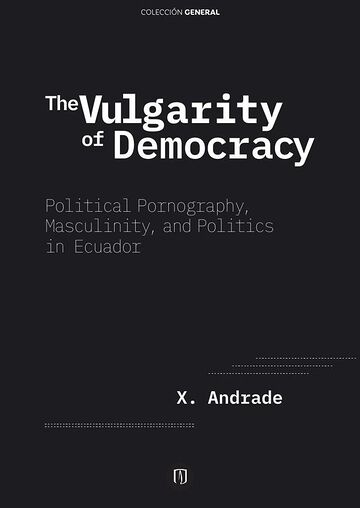
The Vulgarity of Democracy.

The Vulgarity of Democracy.

Universidad de los Andes
USD $ 19,27

THE VULGARITY OF DEMOCRACY explores key aesthetics and affective aspects of democracy via a visual ethnographic exploration of political pornography and the public uses of machismo to construct agendas for popular redemption in Guayaquil, Ecuador, during the 1980s. This period was the beginning of a highly conflictive social process resulting from the imposition of neoliberal policies. Its focus is on the life and work of Pancho Jaime (1946-1989), the most controversial and widely known rock promoter and independent journalist in Ecuador. Between 1984 and his assassination in 1989, Jaimes underground publications used in-depth investigation as well as gossip, pornographic cartoons, and obscene language to comment on democracy and the corruption of political elites. Jaimes strategy was to denounce the conduct of powerful figures in public office, and caricaturize their deformed bodies as indexes of their supposedly deviant sexuality.The cultural materials that compose this censored archive are studied as part of a politics of masculinity historically linked to the hippy legacy, everyday life performances, and populist traditions. Following contemporary and comparative discussions on the political economy of images, and the materiality of image-objects, X. Andrade analyzes the production, circulation, and consumption of Pancho Jaimes political magazine s, audience responses to grotesque visual and aggressive textual discourses, and the effects of revealing public secrets about popular understandings of politics, Ethnographic findings are discussed in relation to concepts of vulgarity, defacement, the performance of masculinity in the public sphere, intimacy, and carnivalesque inversions of power. Going beyond plain understandings of the popular, this is a critical contribution to current debates on the anthropology of the media, visual economies, fake news, populism, machismo, and the sociallife of images in contemporary societies.

THE VULGARITY OF DEMOCRACY explores key aesthetics and affective aspects of democracy via a visual ethnographic exploration of political pornography and the public uses of machismo to construct agendas for popular redemption in Guayaquil, Ecuador, during the 1980s. This period was the beginning of a highly conflictive social process resulting from the imposition of neoliberal policies. Its focus is on the life and work of Pancho Jaime (1946-1989), the most controversial and widely known rock promoter and independent journalist in Ecuador. Between 1984 and his assassination in 1989, Jaimes underground publications used in-depth investigation as well as gossip, pornographic cartoons, and obscene language to comment on democracy and the corruption of political elites. Jaimes strategy was to denounce the conduct of powerful figures in public office, and caricaturize their deformed bodies as indexes of their supposedly deviant sexuality.The cultural materials that compose this censored archive are studied as part of a politics of masculinity historically linked to the hippy legacy, everyday life performances, and populist traditions. Following contemporary and comparative discussions on the political economy of images, and the materiality of image-objects, X. Andrade analyzes the production, circulation, and consumption of Pancho Jaimes political magazine s, audience responses to grotesque visual and aggressive textual discourses, and the effects of revealing public secrets about popular understandings of politics, Ethnographic findings are discussed in relation to concepts of vulgarity, defacement, the performance of masculinity in the public sphere, intimacy, and carnivalesque inversions of power. Going beyond plain understandings of the popular, this is a critical contribution to current debates on the anthropology of the media, visual economies, fake news, populism, machismo, and the sociallife of images in contemporary societies.
  • Isbn
    9789587748949
  • Peso
    0.48 kg.
  • Tamaño
    17 x 24 cm.
  • Número de páginas
    280
  • Idioma
    Inglés
  • Referencia
    POD46502