search
Subtotal USD $ 0,00
Total USD $ 0,00
  • Nuevo
  • Libro
    Digital
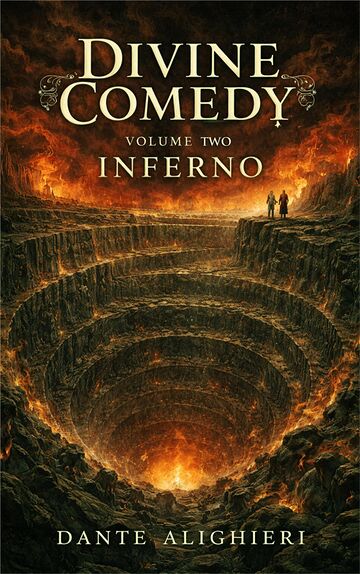
Divine Comedy (Volume II)

Divine Comedy (Volume II)

USD $ 5,89

Readers often cannot understand how such a serious work may be called a "comedy". In Dante's time, all serious scholarly works were written in Latin, a tradition that would persist for several hundred years more until the waning years of the Enlightenment, and works written in any other language were assumed to be more trivial in nature. Furthermore, the word "comedy" in the classical sense refers to works which reflect belief in an ordered universe, in which events tended toward not only a happy or amusing ending but one influenced by a Providential will that orders all things to an ultimate good. By this meaning of the word, as Dante himself wrote in a letter to Cangrande I della Scala, the progression of the pilgrimage from Hell to Paradise is the paradigmatic expression of comedy since the work begins with the pilgrim's moral confusion and ends with the vision of God. "IN the midway of this our mortal life, I found me in a gloomy wood, astray Gone from the path direct: and e'en to tell It were no easy task, how savage wild That forest, how robust and rough its growth, Which to remember only, my dismay Renews, in bitterness not far from death.." (Dante)

Readers often cannot understand how such a serious work may be called a "comedy". In Dante's time, all serious scholarly works were written in Latin, a tradition that would persist for several hundred years more until the waning years of the Enlightenment, and works written in any other language were assumed to be more trivial in nature. Furthermore, the word "comedy" in the classical sense refers to works which reflect belief in an ordered universe, in which events tended toward not only a happy or amusing ending but one influenced by a Providential will that orders all things to an ultimate good. By this meaning of the word, as Dante himself wrote in a letter to Cangrande I della Scala, the progression of the pilgrimage from Hell to Paradise is the paradigmatic expression of comedy since the work begins with the pilgrim's moral confusion and ends with the vision of God. "IN the midway of this our mortal life, I found me in a gloomy wood, astray Gone from the path direct: and e'en to tell It were no easy task, how savage wild That forest, how robust and rough its growth, Which to remember only, my dismay Renews, in bitterness not far from death.." (Dante)
  • Isbn
    9786253874902
  • Peso
    11 MB
  • Número de páginas
    169
  • Idioma
    Inglés
  • Formato
    EPUB
  • Protección
    DRM
  • Referencia
    BKW180353

Dante Alighieri

Autor

Dante Alighieri, bautizado Durante di Alighiero degli Alighieri (Florencia, c. 29 de mayo de 1265 - Rávena, 14 de septiembre de 1321), fue un poeta italiano, conocido por escribir la Divina comedia, una de las obras fundamentales de la transición del pensamiento medieval al renacentista y una de las cumbres de la literatura universal. La fecha exacta del nacimiento de Dante es desconocida, aunque generalmente se cree que está alrededor de 1265. Esto puede deducirse de las alusiones autobiográficas reflejadas en la Vita nuova. Durante su vida, Dante participó activamente en las luchas políticas de su tiempo, por lo que fue desterrado de su ciudad natal, y fue un activo defensor de la unidad italiana. Escribió varios tratados en latín sobre literatura, política y filosofía. A su pluma se debe el tratado en latín De Monarchia, de 1310, que constituye una exposición detallada de sus ideas políticas, entre las cuales se encuentran la necesidad de la existencia de un Sacro Imperio Romano y la separación de la Iglesia y el Estado.5 En 1289 participó en la batalla de Campaldino durante la guerra entre Florencia y Arezzo, y contribuyó así a la victoria de los florentinos. Apodado «el Poeta Supremo» (en italiano «il Sommo Poeta»), también se le considera el «padre del idioma italiano» (llamado volgare en aquella época). Su primera biografía fue escrita por Giovanni Boccaccio (1313-1375), en el Trattatello in laude di Dante.