search
¿No encontraste lo que buscas? Prueba aquí
Subtotal USD $ 0,00
Total USD $ 0,00
  • Nuevo
  • Libro
    Digital
The Narrative of the Life...

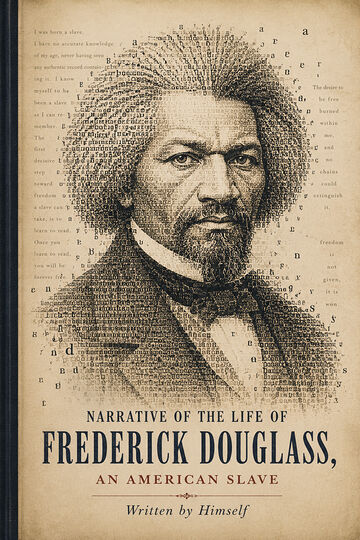
The Narrative of the Life of Frederick Douglass, an American Slave

USD $ 15,99

Narrative of the Life of Frederick Douglass, an American Slave is the autobiographical account of Frederick Douglass, who was born into slavery in Maryland and became one of the most influential abolitionists in American history. Written by Douglass himself, the memoir chronicles his childhood, the brutal realities of enslavement, and his determined pursuit of freedom. The narrative describes the violence, injustice, and dehumanization endured by enslaved people, while exposing the hypocrisy of a society that defended slavery in the name of religion and law. A turning point in Douglass's life comes when he secretly learns to read and write, recognizing education as the path to intellectual and personal liberation. As his awareness grows, so does his desire for freedom. Through courage, resilience, and careful planning, Douglass ultimately escapes slavery and begins a new life in the North, where he becomes a powerful advocate for abolition and equal rights. More than a personal memoir, the book is a compelling condemnation of slavery and a testament to the transformative power of knowledge, dignity, and perseverance. It remains one of the most important autobiographies in American literature and a landmark in the fight for human rights.

Narrative of the Life of Frederick Douglass, an American Slave is the autobiographical account of Frederick Douglass, who was born into slavery in Maryland and became one of the most influential abolitionists in American history. Written by Douglass himself, the memoir chronicles his childhood, the brutal realities of enslavement, and his determined pursuit of freedom. The narrative describes the violence, injustice, and dehumanization endured by enslaved people, while exposing the hypocrisy of a society that defended slavery in the name of religion and law. A turning point in Douglass's life comes when he secretly learns to read and write, recognizing education as the path to intellectual and personal liberation. As his awareness grows, so does his desire for freedom. Through courage, resilience, and careful planning, Douglass ultimately escapes slavery and begins a new life in the North, where he becomes a powerful advocate for abolition and equal rights. More than a personal memoir, the book is a compelling condemnation of slavery and a testament to the transformative power of knowledge, dignity, and perseverance. It remains one of the most important autobiographies in American literature and a landmark in the fight for human rights.
  • Isbn
    7503061802574
  • Peso
    1 MB
  • Número de páginas
    100
  • Idioma
    Inglés
  • Formato
    EPUB
  • Protección
    DRM
  • Referencia
    BKW197755

Frederick Douglass

Autor

Thomas Clarkson (28 March 1760 – 26 September 1846) was a renowned English abolitionist and a leading campaigner against the transatlantic slave trade. His seminal role in the abolitionist movement is well-documented, and his tireless efforts contributed significantly to the passage of the Slave Trade Act of 1807, which made the trade illegal in the British Empire. Clarkson is most famous for his pioneering work 'The History of the Abolition of the African Slave-Trade' published in 1808, which provides a detailed account of the abolition campaign. While 'UNCHAINED - Powerful & Unflinching Narratives Of Former Slaves: 28 True Life Stories in One Volume' has been attributed to him in some literary references, it is important to note that this particular work may not have been penned by Clarkson himself, but could instead be a modern compilation of slave narratives that reflects his influence and legacy. Clarkson's intellectual rigor and humanitarian spirit were hallmarks of his writing style. He contributed to the genre of abolitionist literature, employing both empirical evidence and moral arguments to persuade his readers of the inhumanity inherent in the practice of slavery. His literary efforts, along with his activism, were instrumental in shifting public opinion and achieving legislative progress towards ending the institution of slavery in the British territories.