search
Subtotal USD $ 0,00
Total USD $ 0,00
  • Nuevo
  • Libro
    Digital
Group Psychology and the...

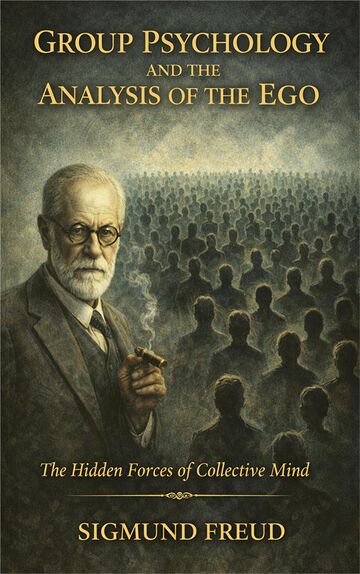
Group Psychology and the Analysis of the Ego

USD $ 8,01

In Group Psychology and the Analysis of the Ego, (1922), Sigmund Freud based his preliminary description of group psychology on Le Bon's work, but went on to develop his own, original theory, related to what he had begun to elaborate in Totem and Taboo. Theodor Adorno reprised Freud's essay in 1951 with his Freudian Theory and the Pattern of Fascist Propaganda, and said that "It is not an overstatement if we say that Freud, though he was hardly interested in the political phase of the problem, clearly foresaw the rise and nature of fascist mass movements in purely psychological categories. The contrast between Individual Psychology and Social or Group[1] Psychology, which at a first glance may seem to be full of significance, loses a great deal of its sharpness when it is examined more closely. It is true that Individual Psychology is concerned with the individual man and explores the paths by which he seeks to find satisfaction for his instincts; but only rarely and under certain exceptional conditions is Individual Psychology in a position to disregard the relations of this individual to others.

In Group Psychology and the Analysis of the Ego, (1922), Sigmund Freud based his preliminary description of group psychology on Le Bon's work, but went on to develop his own, original theory, related to what he had begun to elaborate in Totem and Taboo. Theodor Adorno reprised Freud's essay in 1951 with his Freudian Theory and the Pattern of Fascist Propaganda, and said that "It is not an overstatement if we say that Freud, though he was hardly interested in the political phase of the problem, clearly foresaw the rise and nature of fascist mass movements in purely psychological categories. The contrast between Individual Psychology and Social or Group[1] Psychology, which at a first glance may seem to be full of significance, loses a great deal of its sharpness when it is examined more closely. It is true that Individual Psychology is concerned with the individual man and explores the paths by which he seeks to find satisfaction for his instincts; but only rarely and under certain exceptional conditions is Individual Psychology in a position to disregard the relations of this individual to others.
  • Isbn
    9786253875466
  • Peso
    3.6 MB
  • Número de páginas
    190
  • Idioma
    Inglés
  • Formato
    EPUB
  • Protección
    DRM
  • Referencia
    BKW181731
Sigmund Freud

Sigmund Freud

Autor

Nació en Freiberg (República Checa) el 6 de mayo de 1856 en una familia judía. En 1860 se trasladan a Viena, donde Freud cursa la carrera de Medicina (1873-1881). En 1885-1886 visita la clínica neurológica de la Salpêtrière de París y asiste al tratamiento de mujeres histéricas mediante hipnosis y sugestión. Profesor de Neuropatología en la Universidad de Viena (1885-1902), publica con Josef Breuer Estudios sobre la histeria (1895), donde establece el método de la libre asociación. En La interpretación de los sueños (1900) formula los conceptos centrales del primer psicoanálisis. A partir de 1902, siendo Freud catedrático de Neuropatología, empiezan a tener lugar en su domicilio las «veladas de los miércoles», en las que se discuten los hallazgos del psicoanálisis. En 1908 se celebra en Salzburgo el Primer Congreso Internacional de Psicoanálisis, y en 1910 se fundan la Zentralblatt für Psychoanalyse y la Asociación Psicoanalítica Internacional, cuyo primer presidente fue C. G. Jung. Entre 1923 y 1930, Freud introducirá importantes modificaciones en la teoría psicoanalítica. En 1938 deb abandonar Viena y exiliarse en Londres, donde muere el año siguiente.